About me
I lead the design of embedded control systems that shape how complex machines sense, decide, and act reliably.
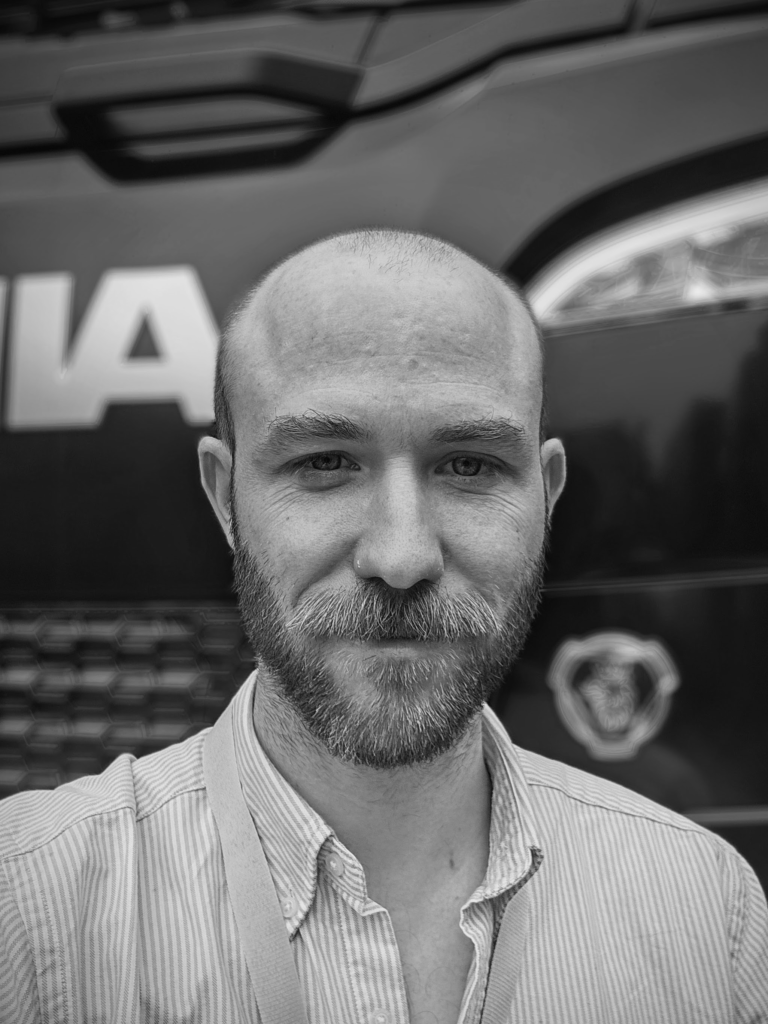
I’m Carlos, an Embedded Control Systems Architect and Technical Lead who combines hands-on development with technical direction across control strategy, real-time software, diagnostics, and system integration.
Background
Production embedded controls for complex physical systems
For more than 12 years, I have developed production embedded control software for electric trucks, autonomous machines, power electronics, and other complex vehicle systems.
At Scania, Volvo CE, and MAHLE Electronics, I have worked with international teams across controls, embedded software, electronics, diagnostics, testing, and calibration. Software from this work runs in production vehicles and machines around the world.
Engineering Scope
From control strategy to production delivery
I lead embedded controls from system definition and control strategy through real-time software, diagnostics, validation, calibration, and system integration.
I turn product goals, physical behaviour, interfaces, and uncertainty into clear software responsibilities and validation evidence. I favour robust solutions that respect performance, timing, safety-related constraints, and the realities of production delivery.
Technical Leadership
Technical direction across multidisciplinary teams
I establish technical direction and align controls, embedded software, electronics, diagnostics, testing, calibration, and supplier interfaces around the intended system behaviour.
I clarify responsibilities, resolve issues at discipline boundaries, and keep decisions connected to system intent, engineering evidence, and production delivery.
My Story
From robotics to production embedded controls
What makes a machine truly intelligent? I have been fascinated by that question for as long as I can remember.
Read the story behind my work Read less
I started experimenting with electronics at eight, but the moment that set my direction came later, at Campus Party Valencia. I watched a line-following robot I had built wobble and overshoot, while other robots moved smoothly through the same turns. The hardware was capable of more — the difference was in how the system was controlled.
That gap has shaped how I think about intelligent machines ever since: not sophisticated logic, but the ability to sense what's happening, judge what matters under uncertainty, and act on it reliably. That question took me through Electrical Engineering and an industrial doctorate in automatic control, and later into the automotive industry, where I learned that a sound idea also has to survive noisy signals, limited resources, and deadlines.
That combination of curiosity and production experience now shapes how I work. I enjoy exploring difficult problems, but I also know that engineering creates value only when a solution can be understood, maintained, validated, and delivered.
Beyond Engineering
More than what I build
Outside work, I keep learning through basketball, making things, and time with the people who keep work in perspective.
A little more beyond work Read less
Basketball has been part of my life since childhood, and it still is. I enjoy competing, staying sharp, and helping younger players develop. Being part of a team working toward a shared goal outside of engineering keeps that instinct alive in a different way.
I'm naturally curious, and I like trying things I haven't done before, whether that means picking up a new skill, testing an idea, or occasionally building something — through 3D printing, lamp design, painting, electronics, or home automation. These projects are less about the outcome and more about the habit of staying curious.
Most importantly, time with my partner, our child, our dog, and friends keeps work in perspective and reminds me to protect space for the people and experiences that matter beyond engineering.
Contact
Have an embedded systems opportunity, technical question, or collaboration in mind?
I’m open to related roles, technical leadership opportunities, freelance engineering work, and conversations about embedded controls, electrification, diagnostics, and intelligent physical systems.